Astronomers Use Telescopes Sensitive to Which Parts of the Spectrum
Peter Bunclark took this image of Galaxy M101 in visible light. Visible ultraviolet and infrared e.

How Does Astronomical Telescope Works Quora
Scientist who uses telescopes and other tools to study the universe.

. They can use detectors of radio infrared optical ultraviolet X-ray and gamma-ray light to create images of stars and galaxies and other cosmic objects. The Moon the Planets of our Solar System the Sun Deep Sky Objects Comets Stars Light pollution Novae Supernovae and Satellites. Visible and infrared b.
Even though all light is fundamentally the same thing the way that astronomers observe light depends on the portion of. Detectors sensitive to ultraviolet light guide astronomers to new information. Astronomers use telescopes that detect different parts of the electromagnetic spectrum.
Astronomers use telescopes that detect different parts of the electromagnetic spectrum. X-rays ultra-violet visible optical light infrared microwave and various radio waves. Visible and ultraviolet c visible and radio d.
These different instruments allow us to access a range of different information emitted by stars. Observatories Across the Electromagnetic Spectrum Astronomers use a number of telescopes sensitive to different parts of the electromagnetic spectrum to study objects in space. Astronomers can use ground-hased telescopes to observe in the following parts of the electromagnetic spectrum.
There are radio telescopes infrared telescopes optical visible light telescopes and so on. Each element in the periodic table can appear in gaseous form and will produce a series of bright lines unique to that element. So to answer why you cant just use a single telescope to view all the parts in the electromagnetic spectrum is because nature has determined what the design of the telescope.
Astronomers use telescopes that detect different parts of the electromagnetic spectrum. NASAs Kuiper Airborne Observatory and the Stratospheric Observatory Astronomy SOFIA. Astronomers use a number of telescopes sensitive to different parts of the electromagnetic spectrum to study objects in space.
Even though all light is fundamentally the same thing the way that astronomers observe light depends on the portion of the spectrum they wish to study. Astronomers use various telescopes to gather information using ALL energies in the electromagnetic spectrum viz. Tools are useful such as detectors that help see the different.
There are radio telescopes infrared telescopes optical visible light telescopes and so on. Hydrogen will not look like helium which will not look like carbon which will not look like iron. By studying the electromagnetic waves given off by objects such as stars galaxies and black holes astronomers can better understand the universe.
Each type of telescope can only detect one part of the electromagnetic spectrum. A radio telescope does not have this difficulty since the background of radio waves during the day isnt much more than at night. Each type of telescope can only detect one part of the electromagnetic spectrum.
Even though all light is fundamentally the same thing the way that astronomers observe light depends on the portion of the spectrum they wish to study. The part of the electromagnetic spectrum that humans can see. 2 Our eyes are only sensitive to a small part of the EM spectrum.
Even though all light is fundamentally the same thing the way that astronomers observe light depends on the portion of. Astronomers use a number of telescopes sensitive to different parts of the electromagnetic spectrum to study objects in space. 1 The Electromagnetic Spectrum covers a huge range - from radio waves to gamma rays.
There are radio telescopes infrared telescopes optical visible light telescopes and so on. In the last 150 years people have discovered and put to use a large part of. Telescopes and the electromagnetic spectrum.
4 Telescopes in space are probing much more of the EM spectrum since most radiation does not reach the. Visible-light astronomy encompasses a wide variety of observations via telescopes that are sensitive in the range of visible light optical telescopesVisible-light astronomy is part of optical astronomy clarification needed and differs from astronomies based on invisible types of light in the electromagnetic radiation spectrum such as radio waves infrared waves ultraviolet waves. Now there are a number of factors that dictate what an Astronomer can observe and the level of detail they can then see their objects with.
It is essential to use a number of telescopes sensitive to different parts of the electromagnetic spectrum to study objects in space. Each type of telescope can only detect one part of the electromagnetic spectrum. Astronomers do the same thing with light across the electromagnetic spectrum.
Tool astronomers use to stud the different forms of energy. You will find telescopes in a whole lot of types such as optical telescopes for visible light infrared telescopes and the likes. Visible infrared and radico 41.
The image below is another view of Galaxy M101 taken by the Ultraviolet Imaging Telescope UIT onboard the Space Shuttle Endeavour. One type of telescope can only detect one part from the electromagnetic spectrum. So they spend lots of lonely nights at the observatory.
Telescopes use lenses or mirrors to collect and focus waves from the electromagnetic spectrum including visible light allowing us to look at celestial objects. Generally here are what Astronomers primarily use telescopes to see. Visible light only occupies a small part of the electromagnetic spectrum.
3 Telescopes gather much more light and have much higher resolving power than our eyes. Optical astronomers cannot work effectively during the day because the blinding effect of the sun and the glowing blue sky make astronomical objects hard to see. Heat from our bodies and a parrots body is emitted as infrared light.
UIT is an instrument sensitive to ultraviolet light.
Pin On Space
Advantages And Disadvantages Of An Astronomical Telescope Qs Study
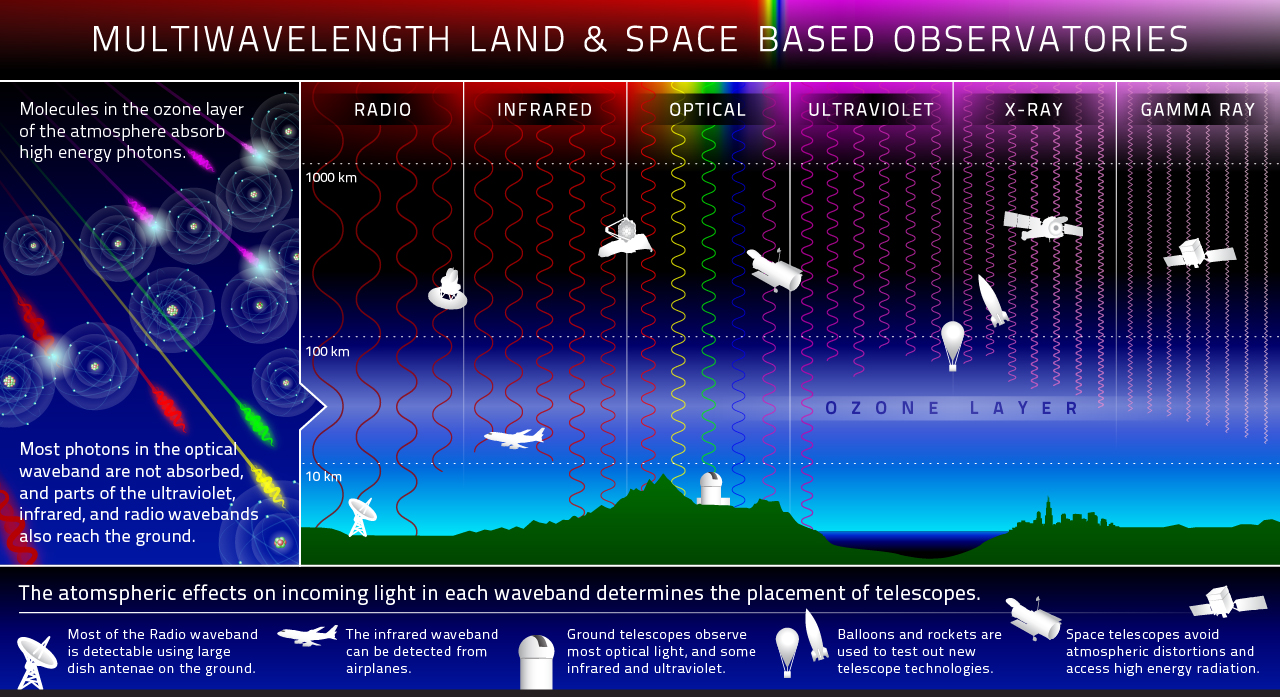
Telescopes Multiwavelength Astronomy

Comments
Post a Comment